
Vitiligo Surgery in Patna
Do you struggle with acne scars, uneven skin texture, open pores, fine lines, or dull ageing skin? If creams and facials have not given you the results you were hoping for, it may be time to consider something more powerful. Fractional CO2 Laser is one of the most advanced and effective skin resurfacing treatments available in modern dermatology
Understanding Vitiligo – What is it and Why Does it Happen?
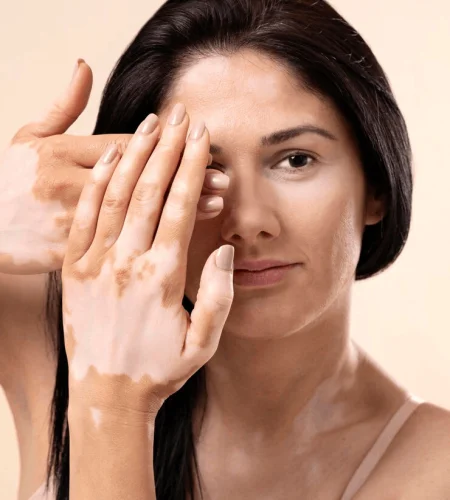
Vitiligo is a chronic autoimmune skin condition in which the immune system mistakenly attacks and destroys melanocytes — the cells responsible for producing skin pigment (melanin). When melanocytes are lost, the affected areas of skin lose their colour and appear as white or pale patches. These patches can appear anywhere on the body and may gradually expand over time if left untreated.
Vitiligo affects approximately 1 to 2 percent of the global population and is seen equally in men and women, across all skin tones and age groups. While it is not contagious, not painful, and not life-threatening, its visible nature can cause significant emotional and psychological distress — particularly in a country like India where skin tone is deeply tied to social perception.
Common areas where vitiligo appears include:
- Face — around the mouth, eyes, and nose
- Hands, fingers, and wrists
- Neck and upper chest
- Elbows and knees
- Feet and ankles
- Scalp — often causing white patches of hair (leukotrichia)
- Genitals and sensitive areas
Types of Vitiligo
Understanding the type of vitiligo you have is essential for choosing the right treatment approach. At Waater Skin & Hair Clinic, Dr. Swati Surabhi and Dr. Prashant Kumar conduct a thorough evaluation to classify your condition before recommending any treatment.
- Generalised Vitiligo — the most common form, where patches appear symmetrically on both sides of the body and may spread over time
- Segmental Vitiligo — patches appear on one side or segment of the body, tend to spread rapidly for 1 to 2 years and then stabilise. This type responds particularly well to surgical treatment.
- Focal Vitiligo — one or a few isolated patches in a specific area without widespread spread
- Acrofacial Vitiligo — affects the face, hands, and feet, particularly around the fingers, toes, and lips
- Universal Vitiligo — a rare form where more than 80 percent of the body surface loses pigmentation
- Mucosal Vitiligo — affects the mucous membranes of the mouth and genitals
When is Vitiligo Surgery Recommended?
Surgery is not the first line of treatment for vitiligo. It is typically recommended when:
- The vitiligo has been stable for at least 6 to 12 months — meaning no new patches have appeared and existing patches have not expanded
- Medical treatments such as topical steroids, calcineurin inhibitors, and phototherapy (NB-UVB) have been tried but results are insufficient
- The patches are localised and well-defined rather than widespread
- The patient is in good general health with no active autoimmune flare-ups
- The patient has realistic expectations and is committed to post-operative care and follow-up phototherapy
Surgical treatment for vitiligo works by transplanting healthy melanocytes or pigmented skin from an unaffected donor area to the depigmented patches, allowing repigmentation to occur gradually.
Vitiligo Surgery Techniques Offered at Waater Skin & Hair Clinic
At Waater Clinic, our dermatologists are trained in multiple surgical techniques for vitiligo. The most appropriate method is chosen based on the size, location, and type of the patch, as well as the patient’s skin type and overall suitability.
1. Suction Blister Epidermal Grafting (SBEG)
This is one of the most commonly performed and well-established vitiligo surgical techniques. Suction is applied to a healthy pigmented area of skin to create a blister. The roof of this blister — which contains a rich layer of melanocytes — is carefully harvested and transplanted onto the depigmented patch after the surface is prepared using dermabrasion or laser.
Key features of SBEG:
- Minimal scarring at both donor and recipient sites
- Good colour matching as the graft comes from your own skin
- Suitable for smaller, well-defined patches on the face and body
- Quick procedure with relatively low discomfort
- High repigmentation success rate for stable vitiligo
2. Split Thickness Skin Grafting (STSG)
In this technique, a thin layer of pigmented skin is harvested from the donor area — usually the thigh — using a dermatome instrument. This thin skin graft is then applied to the prepared depigmented area and secured in place. STSG is particularly effective for larger patches where other techniques may be less practical.
Key features of STSG:
- Suitable for larger areas of vitiligo
- Reliable take rate when performed in stable vitiligo
- Results in good cosmetic outcome with proper post-operative care
- Requires careful dressing and wound care at the donor site
3. Melanocyte-Keratinocyte Transplantation Procedure (MKTP)
MKTP, also known as non-cultured epidermal cell suspension transplantation, is one of the most advanced techniques available for vitiligo surgery. A small area of pigmented skin is taken from the donor site and processed in the laboratory to create a suspension of melanocytes and keratinocytes. This cell suspension is then spread over a much larger depigmented area, allowing a small donor site to treat a significantly larger recipient area.
Key features of MKTP:
- A very small donor area can treat a much larger recipient patch — ideal ratio of up to 1:10
- Excellent for large areas of vitiligo that would otherwise require extensive grafting
- Even, natural repigmentation with no cobblestoning or graft lines
- Minimal donor site scarring
- Suitable for difficult areas like the lips, eyelids, and hands
4. Punch Grafting
Small circular punches of pigmented skin are taken from the donor area and placed at regular intervals into similarly sized holes created on the depigmented patch. Pigment spreads outward from each graft point over time, eventually covering the entire treated area.
Key features of punch grafting:
- Simple, cost-effective procedure
- Suitable for small, stable patches
- Can result in a cobblestone appearance if not done precisely — requires an experienced doctor for best cosmetic results
- Effective for patches on areas like the lips and fingertips
What to Expect – Your Vitiligo Surgery Journey at Waater Clinic
Step 1 – Comprehensive Consultation and Stability Assessment Our doctors will examine all your patches, review your vitiligo history, and assess whether your condition is stable enough for surgery. This may involve reviewing photographs taken over 6 to 12 months. Blood tests and an assessment of your immune status may also be recommended.
Step 2 – Pre-Surgery Preparation Before your procedure you will be advised to:
- Continue any ongoing phototherapy as prescribed — this improves surgical outcomes
- Avoid sun exposure to both donor and recipient areas
- Discontinue blood-thinning medications as advised by your doctor
- Maintain good nutrition and hydration in the weeks leading up to surgery
- Avoid any trauma, infections, or skin injuries — a phenomenon known as Koebner’s phenomenon, where vitiligo can appear in areas of skin injury, must be prevented
Step 3 – The Surgical Procedure All vitiligo surgeries at Waater Clinic are performed under local anaesthesia in a sterile clinical environment. The duration depends on the technique used and the size of the area being treated. Most procedures take 1 to 3 hours. You will be awake and comfortable throughout. Both the donor and recipient areas are treated with the utmost care to ensure the best cosmetic outcome at both sites.
Step 4 – Post-Operative Care and Dressing After surgery:
- The treated area is dressed carefully and must be kept undisturbed for the first 5 to 7 days
- Avoid any pressure, friction, or movement in the operated area
- Dressings are changed at scheduled clinic visits — do not attempt to change them at home without guidance
- Avoid sun exposure to treated areas during early healing
- Prescribed antibiotics and anti-inflammatory medications must be taken as directed
- Donor site care instructions will be provided separately
Step 5 – Post-Surgery Phototherapy Phototherapy — specifically Narrowband UVB (NB-UVB) — is almost always recommended after vitiligo surgery to stimulate the transplanted melanocytes, enhance repigmentation, and spread colour from the graft edges into surrounding depigmented skin. This combination of surgery and phototherapy gives the best possible repigmentation results.
Step 6 – Repigmentation and Results Repigmentation begins gradually. Here is the typical timeline:
- Week 2 to 4 — The graft begins to settle. Initial pinkish colour may be visible at the transplant site.
- Month 1 to 3 — Melanocytes begin migrating from the graft into surrounding skin. Early spots of pigment appear.
- Month 3 to 6 — Progressive spreading of pigmentation across the treated patch with phototherapy support.
- Month 6 to 12 — Maximum repigmentation is achieved. The colour gradually deepens and blends with surrounding normal skin.
- Month 12 to 18 — Final colour match and cosmetic outcome are assessed.
Results vary from patient to patient. Areas like the face and trunk tend to repigment better and faster than areas like the hands, feet, and fingers, which have fewer melanocyte reservoirs and require more sessions.
Which Body Areas Respond Best to Vitiligo Surgery?
Repigmentation success varies by location. Generally:
Best responding areas:
- Face — forehead, cheeks, chin
- Neck and upper chest
- Back and abdomen
- Upper arms and thighs
Moderately responding areas:
- Lower legs and forearms
- Scalp patches
Challenging areas requiring specialised approach:
- Lips and around the mouth
- Fingertips and hands
- Feet and ankles
- Over bony prominences like elbows and knees
Our doctors will give you an honest assessment of the expected repigmentation in your specific areas during your consultation.
Non-Surgical Vitiligo Treatments Also Available at Waater Clinic
Surgery is not the only option. For patients who are not yet candidates for surgery or prefer to start with non-surgical approaches, Waater Skin & Hair Clinic also offers:
- Narrowband UVB Phototherapy (NB-UVB) — the most effective non-surgical treatment for vitiligo, stimulating melanocytes to produce pigment under controlled UV exposure
- Topical Corticosteroids and Calcineurin Inhibitors — prescription creams that help slow immune attack and support repigmentation in early or localised vitiligo
- Oral and Topical Psoralen with UVA (PUVA) — a photosensitising treatment combined with UVA light
- Excimer Laser — targeted laser phototherapy for small, stubborn patches
- Vitamin D analogues and combination therapy — supporting melanocyte function and immune modulation
- Camouflage and medical-grade cosmetic cover — for patients seeking immediate cosmetic improvement while undergoing treatment
A comprehensive treatment plan often combines medical therapy with surgical intervention at the right time for the best possible outcome.
Emotional and Psychological Support
At Waater Skin & Hair Clinic, we understand that vitiligo is not just a physical condition. The psychological impact — including anxiety, depression, social withdrawal, and reduced self-esteem — is real and significant, particularly for patients in India where skin appearance carries strong cultural weight. Our doctors approach every consultation with sensitivity, empathy, and a genuine commitment to improving not just your skin but your overall quality of life.
We take the time to listen, explain, and set realistic expectations so that you feel informed, supported, and never alone in your treatment journey.
Benefits of Vitiligo Surgery at Waater Skin & Hair Clinic
- Permanent repigmentation in treated areas — unlike creams which require lifelong use
- Natural colour restoration using your own skin and cells — no foreign materials
- Dramatic improvement in appearance and self-confidence
- Multiple surgical techniques available — the most suitable one chosen for your case
- Combined surgery and phototherapy protocol for maximum repigmentation
- Safe, clinically performed procedure under local anaesthesia
- Experienced dermatologists with dedicated expertise in vitiligo management
- Compassionate, patient-centred approach at every step
Frequently Asked Questions
Is vitiligo surgery permanent? Yes. Once repigmentation is achieved through surgery and phototherapy, the restored colour is generally permanent in stable vitiligo. However, if the underlying autoimmune condition is not well controlled, new patches can appear in other areas of the body over time.
Does vitiligo surgery hurt? The procedure is performed under local anaesthesia, so you will not feel pain during surgery. Mild soreness at the donor and recipient sites is normal for a few days afterwards and is managed with prescribed pain relief.
How do I know if my vitiligo is stable? Stability means no new patches have appeared and existing patches have not grown for at least 6 to 12 months. Your doctor will assess this through your history, photographs, and clinical examination during the consultation.
Can children undergo vitiligo surgery? Vitiligo surgery is generally recommended for patients above 12 to 14 years of age, provided the condition is stable. Our doctors assess each young patient individually and involve parents in all treatment decisions.
What is the success rate of vitiligo surgery? Success rates vary by technique and body area. On average, well-selected patients treated with MKTP or SBEG achieve 70 to 90 percent repigmentation in treated areas. Face and trunk areas consistently show the highest success rates.
How many sessions of surgery will I need? Many patients achieve satisfactory results in one surgical session followed by phototherapy. Larger areas or patches in challenging locations may require a second session after assessing the response to the first.
Will the colour match perfectly? The colour match is generally very good because the melanocytes come from your own skin. Some variation in shade is possible initially, but with continued phototherapy the colour deepens and blends more naturally over 12 to 18 months.
Can vitiligo come back after surgery? In treated areas, repigmentation is generally stable. However, vitiligo is a systemic autoimmune condition, meaning new patches can potentially appear elsewhere on the body. This is why ongoing medical management and monitoring are important even after successful surgery.
Why Choose Waater Skin & Hair Clinic for Vitiligo Treatment in Patna?
- Expert dermatologists Dr. Swati Surabhi and Dr. Prashant Kumar with specialised experience in vitiligo management
- Multiple surgical techniques available — SBEG, STSG, MKTP, and punch grafting
- Comprehensive non-surgical options including NB-UVB phototherapy available alongside surgery
- Thorough stability assessment before any surgical recommendation
- Honest, empathetic consultations with realistic outcome expectations
- Sterile surgical environment with strict clinical protocols
- Dedicated post-operative care and phototherapy follow-up
- Sensitive approach to the emotional and psychological aspects of vitiligo
- Serving patients from Patna, Muzaffarpur, Gaya, Bhagalpur, Darbhanga, Ara, and across Bihar and Jharkhand
Book Your Vitiligo Consultation in Patna Today
Living with vitiligo does not have to mean giving up on the skin you were born in. Whether you are exploring treatment for the first time or have already tried other options without success, Waater Skin & Hair Clinic is here to offer you a clear, honest, and medically sound path forward.
Dr. Swati Surabhi and Dr. Prashant Kumar will assess your condition thoroughly, explain all your options, and work with you to create a personalised treatment plan — surgical, non-surgical, or a combination of both — designed around your specific skin, your goals, and your life.
📍 4A/23, Jagdamba Path, opposite Gitanjali Patho Diagnostic, Block-A, North Sri Krishna Puri, Patna, Bihar 800013 📞 +91 7563085875
Call us today or walk in for a consultation. Your journey to restored skin and renewed confidence begins at Waater Skin & Hair Clinic, Patna.
Start Your Journey to Healthy Skin & Confident Beauty
Experience personalized skin and hair treatments designed to deliver safe, effective, and long-lasting results with expert dermatology care.